Arabic Dialects Explained: A Guide to the 6 Major Varieties
Arabic is not one language but a family of dialects spanning 22 countries. Understanding the difference between Modern Standard Arabic and the six major spoken varieties is essential for anyone working with Arabic translation.
Lingo Service
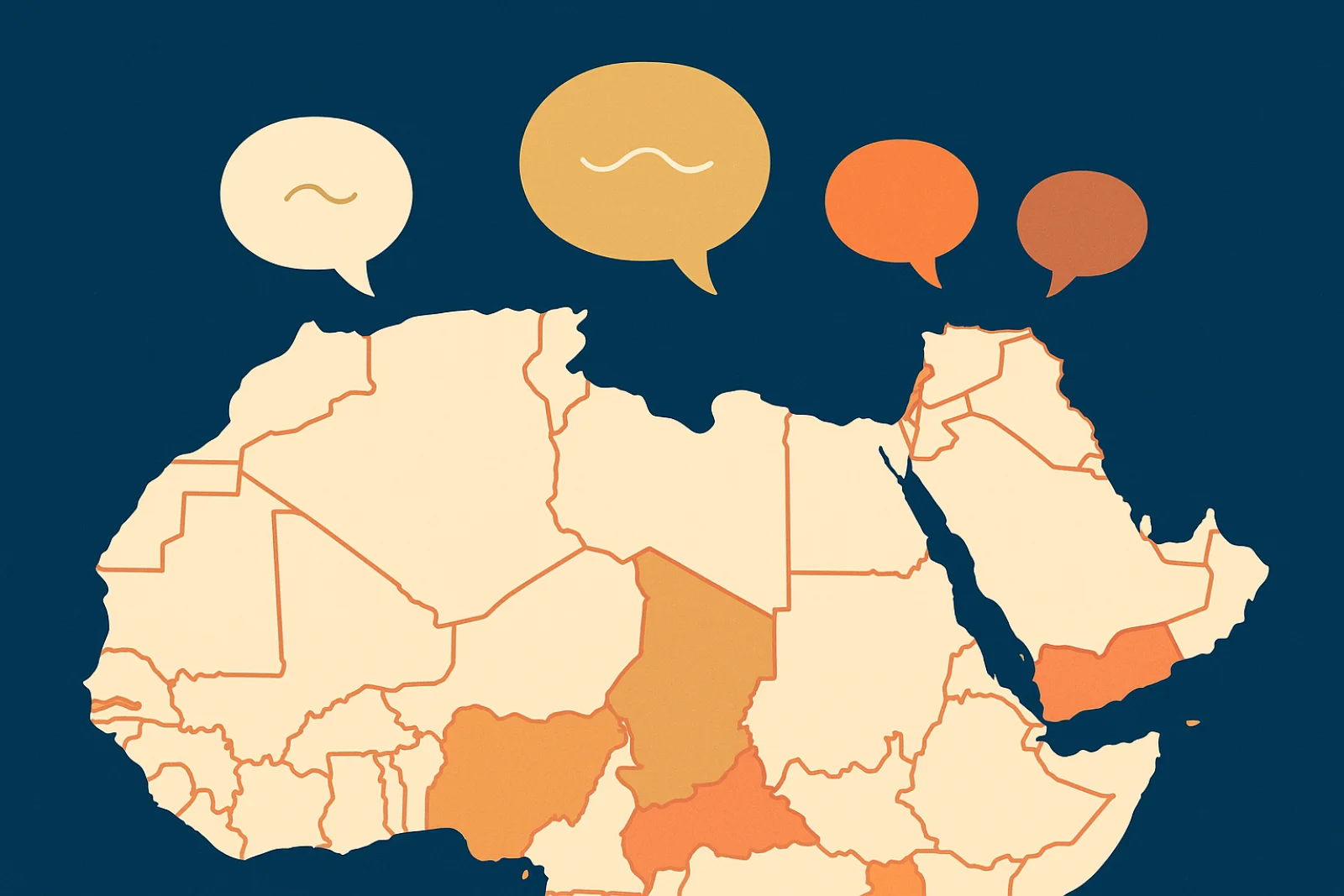
When people talk about "Arabic," they're often referring to a single language. In reality, Arabic is a rich family of dialects that can differ as much from each other as Spanish differs from Portuguese, or even more. Understanding these differences is crucial for anyone who needs Arabic translation services, whether for business, legal, or personal purposes.
Modern Standard Arabic vs Spoken Dialects
The Arabic language exists on two levels. Modern Standard Arabic (MSA), known in Arabic as fusha, is the formal, written language used in news broadcasts, official documents, academic writing, and formal speeches. It's understood across the entire Arab world but is nobody's mother tongue. No child grows up speaking MSA at home.
What people actually speak in daily life are regional dialects (ammiya or darija), which vary significantly from country to country and even city to city. A taxi driver in Cairo speaks Egyptian Arabic; a shopkeeper in Riyadh speaks Gulf Arabic; a student in Casablanca speaks Moroccan Arabic. These are mutually intelligible to varying degrees, an Egyptian and a Lebanese can generally understand each other, but an Egyptian and a Moroccan may struggle considerably.
This distinction matters enormously for translation. A certified translation of a birth certificate will always be in MSA. But if you're dubbing a TV show, localising an app, or translating marketing materials, the dialect choice can make or break your project.
The 6 Major Arabic Dialect Groups
1. Egyptian Arabic (Masri)
Egyptian Arabic is the most widely understood dialect in the Arab world, thanks largely to Egypt's dominance in Arabic film, television, and music since the mid-20th century. With over 100 million speakers, it's the largest Arabic dialect by population.
Key features: Egyptian Arabic replaces the classical "qaf" (ق) sound with a glottal stop, so "I said" becomes 'ult rather than qult. The "jim" (ج) is pronounced as a hard "g", "beautiful" is gameel rather than jameel. Egyptian Arabic also has distinctive vocabulary borrowed from Coptic, Turkish, French, and English.
Used for: Entertainment dubbing, pan-Arab marketing, social media content. Because of its widespread recognition, Egyptian Arabic is often the default choice for Arabic dubbing of entertainment content.
Learn more about our Egyptian Arabic translation services.
2. Gulf Arabic (Khaliji)
Gulf Arabic is spoken across the six GCC countries: Saudi Arabia, the UAE, Qatar, Kuwait, Bahrain, and Oman. While each country has its own sub-dialect, they share enough common ground to be grouped together. Saudi Arabic alone has sub-varieties, Najdi (central), Hejazi (western), and Eastern Province dialects differ noticeably.
Key features: Gulf Arabic preserves some classical sounds that other dialects have lost, including the "qaf" in many words. It has significant Persian and Hindi/Urdu loanwords reflecting historical trade connections. The definite article sometimes shifts from "al-" to "il-" in casual speech.
Used for: Business communications with Gulf clients, business interpreting for Gulf delegations, and corporate training materials for Gulf-based operations. Gulf Arabic is essential for companies working in the Saudi and UAE markets.
Learn more about our Gulf Arabic translation services.
3. Levantine Arabic (Shami)
Levantine Arabic covers Syria, Lebanon, Jordan, and Palestine. It's considered one of the softer, more melodic Arabic dialects and has gained international recognition through Lebanese music and Syrian drama series, which are hugely popular across the Arab world.
Key features: Levantine Arabic often uses "b-" as a present-tense prefix, "I write" becomes baktub. The "qaf" is typically replaced by a glottal stop (like Egyptian) in urban dialects, though rural Jordanian and Palestinian dialects preserve it. French loanwords are common in Lebanese Arabic due to the French mandate period.
Used for: Syrian and Palestinian refugee documentation, court interpreting for asylum cases, and creative content. The Syrian refugee crisis has made Levantine Arabic one of the most in-demand dialects for UK public services.
Learn more about our Levantine Arabic translation services.
4. Iraqi Arabic (Mesopotamian)
Iraqi Arabic is distinct enough from both Gulf and Levantine Arabic to form its own group. It's spoken by around 30 million people in Iraq and has sub-dialects including Baghdadi (the prestige urban dialect), Basrawi (southern), and Maslawi (northern, from Mosul).
Key features: Iraqi Arabic has a distinctive "ch" sound where other dialects use "k", "how much" is chum rather than kam. It preserves the classical "qaf" as a hard "g" in many contexts. Significant Turkish, Persian, and Kurdish loanwords reflect Iraq's multicultural history.
Used for: Iraqi refugee and asylum documentation, police interpreting, and legal proceedings involving Iraqi nationals. The UK's Iraqi community is one of the largest in Europe.
Learn more about our Iraqi Arabic translation services.
5. North African Arabic (Maghrebi / Darija)
North African Arabic, spoken in Morocco, Algeria, Tunisia, and Libya, is the most divergent of all Arabic dialect groups. Moroccan and Algerian Arabic in particular can be virtually unintelligible to speakers of Eastern Arabic dialects, to the extent that some linguists have argued they should be classified as separate languages.
Key features: Massive French (and some Spanish) influence in vocabulary and even grammar. Vowel reduction makes words much shorter, Classical Arabic kitab ("book") becomes ktab. Unique Berber substrate influences the phonology and grammar. The definite article sometimes shifts to "l-" without the "a".
Used for: Immigration documents from Morocco, Algeria, and Tunisia; French-Arabic bilingual translation for North African communities. North African Arabic is one of the most challenging varieties for interpreters from other Arabic-speaking regions.
Learn more about our Maghrebi Arabic translation services.
6. Sudanese Arabic
Sudanese Arabic is spoken in Sudan and parts of South Sudan, Eritrea, and Chad. It forms a bridge between the Arabic of Egypt and the dialects of the wider Sahel region, with significant influence from local Nubian and Nilotic languages.
Key features: Sudanese Arabic preserves some classical sounds while developing unique features. The "qaf" is often realised as a "g" (like Iraqi). Significant Nubian, Turkish, and English loanwords. The dialect has a distinctive rhythm and intonation that sets it apart from other varieties.
Used for: Refugee and asylum documentation, NHS interpreting for Sudanese patients, and legal proceedings. The ongoing conflict in Sudan has increased demand for Sudanese Arabic interpreters in the UK.
Learn more about our Sudanese Arabic translation services.
Which Dialect Do You Need?
The choice of dialect depends entirely on your purpose:
- Official documents and certificates: Always MSA. Certified translations use Modern Standard Arabic regardless of the speaker's dialect.
- Legal proceedings: Match the dialect of the speaker. A Syrian witness needs a Levantine Arabic interpreter; an Iraqi defendant needs an Iraqi Arabic interpreter.
- Business with Gulf clients: Gulf Arabic for spoken communications, MSA for written correspondence.
- Marketing and advertising: Depends on your target market. Pan-Arab campaigns use MSA or Egyptian Arabic; market-specific campaigns use local dialects.
- Subtitling and dubbing: MSA for formal content, Egyptian for entertainment, local dialect for authenticity.
At Arabic Translation UK, we match every project with translators and interpreters who are native speakers of the specific Arabic variety you need. Get a quote and tell us which dialect or country your project involves, we'll assign the right expert.
Topics
Lingo Service
Professional Translation Services Since 2012
Trusted by UK solicitors, businesses and government. Arabic translation specialists, UKVI certified.
Found this useful?
Pass it on to people you know