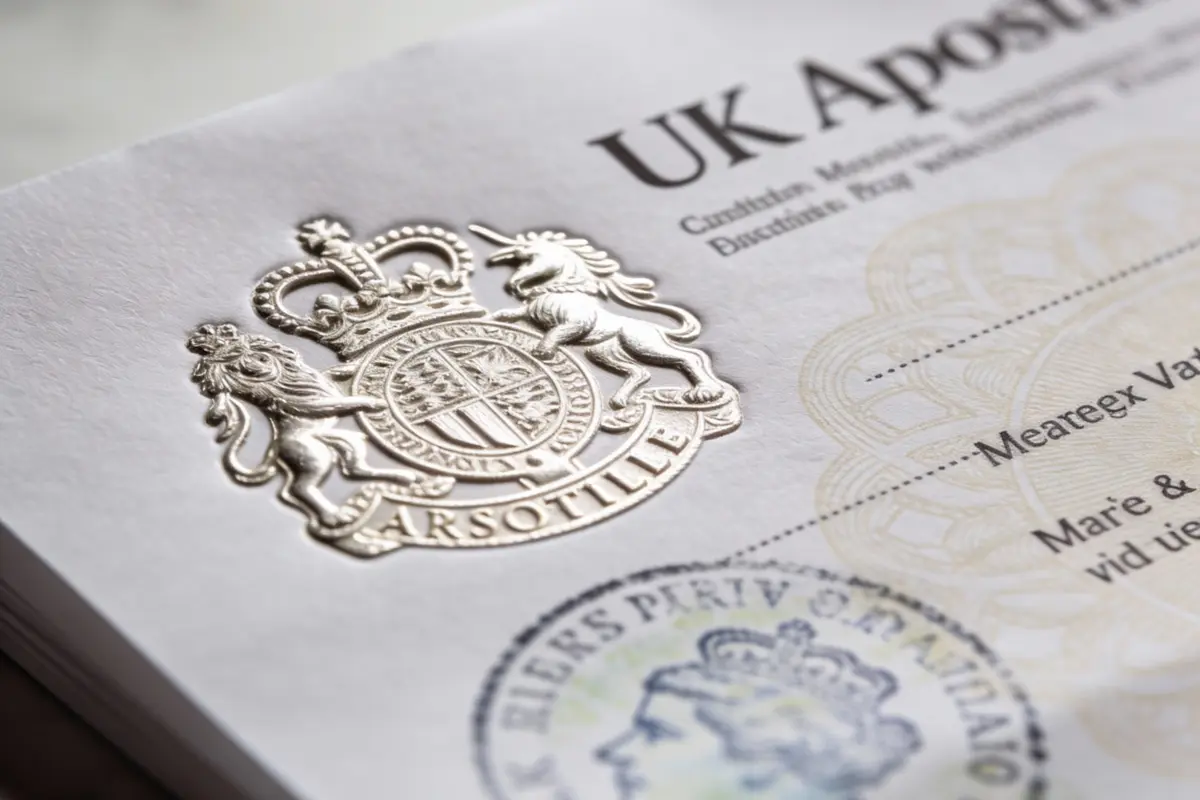
Apostille vs Embassy Attestation: Which Route for Your Arab Country?
One of the most common questions we receive is whether a UK document needs an apostille or embassy attestation for use in an Arab country. The answer depends entirely on whether the destination country is a member of the Hague Apostille Convention.
Arab countries that accept apostilles (Hague Convention members):
- United Arab Emirates — Joined the Hague Convention in 2023. UK apostilles are now accepted directly by UAE authorities for residency visas, employment, company registration, and education.
- Bahrain — Hague Convention member. Apostilled UK documents accepted for visa applications, business registration, and official submissions.
- Oman — Hague Convention member. Apostilled documents accepted for employment visas, family visas, and official purposes.
Arab countries requiring embassy attestation (NOT Hague members):
- Saudi Arabia — Requires full embassy attestation followed by MOFA (Ministry of Foreign Affairs) attestation in Saudi Arabia. This is a multi-step process: translation → notarisation → FCDO legalisation → Saudi Embassy attestation → MOFA stamp.
- Kuwait, Qatar — Require embassy attestation through their respective London embassies.
- Egypt, Jordan, Iraq — Require embassy attestation. Each embassy has specific document requirements and processing times.
The full legalisation chain for non-Hague countries follows this sequence: certified translation → UK notarisation → FCDO legalisation → embassy attestation. We handle every step of this process, regardless of which route your destination country requires.
Not sure which route applies to your situation? Use our legalisation checker tool to find the correct process for your destination country, or browse our country-specific legalisation guides for Saudi Arabia, UAE, Qatar, and Kuwait.