Arabic Voice-Over: Choosing the Right Voice for Your Content
Arabic voice-over is not one-size-fits-all. The Arabic language spans 22 countries with distinct dialects, and the choice of voice register, accent, and tone significantly impacts how your content is received by Arabic-speaking audiences. Selecting the wrong Arabic voice can undermine your message, while the right voice builds credibility and engagement.
Key decisions for Arabic voice-over projects:
- Modern Standard Arabic (MSA), The formal, standardised Arabic variety used for news broadcasts, documentaries, corporate presentations, and educational content. MSA is universally understood across all Arab countries and is the default choice for content targeting a pan-Arab audience. MSA voice-over sounds authoritative and professional, suitable for corporate videos, e-learning narration, and formal presentations.
- Egyptian Arabic, The most widely recognised Arabic dialect due to Egypt's dominant entertainment industry. Egyptian Arabic voice-over is preferred for commercials, entertainment content, and informal narration targeting broad Arab audiences. Egyptian voices sound warm, approachable, and familiar.
- Gulf Arabic, The best choice for content specifically targeting Saudi Arabia, the UAE, Kuwait, Qatar, Bahrain, and Oman. Gulf Arabic voice-over creates an immediate local connection with Gulf audiences and is increasingly requested for regional advertising, corporate communications for Gulf companies, and IVR telephone systems serving Gulf customers.
- Levantine Arabic, Syrian and Lebanese Arabic voices are used for content targeting audiences in the Levant region and have gained broader recognition through popular TV dramas.
We provide Arabic voice talent across all major dialects and registers, with casting recommendations based on your target audience, content type, and distribution platform. Sample recordings are available before you commit to a voice.
Arabic Voice-Over Production: From Script to Final Audio
Professional Arabic voice-over production involves more than simply recording a voice artist reading a translated script. The process requires script adaptation, voice casting, studio recording, audio post-production, and quality assurance, each stage with Arabic-specific considerations that affect the final quality.
Our Arabic voice-over production process:
- Script translation and adaptation, We translate your English script into Arabic and adapt it for spoken delivery. Arabic narration timing differs from English, formal MSA narration tends to be slower-paced than English, while conversational Arabic can be faster. We adjust script length to match your video timing, rewriting where necessary rather than simply compressing or stretching the Arabic delivery.
- Voice casting, We select Arabic voice talent based on your brief: gender, age range, dialect, tone (formal, conversational, energetic, calm), and content type. For projects where voice selection is critical, we provide 2-3 sample recordings of candidate voices reading a short extract from your actual script.
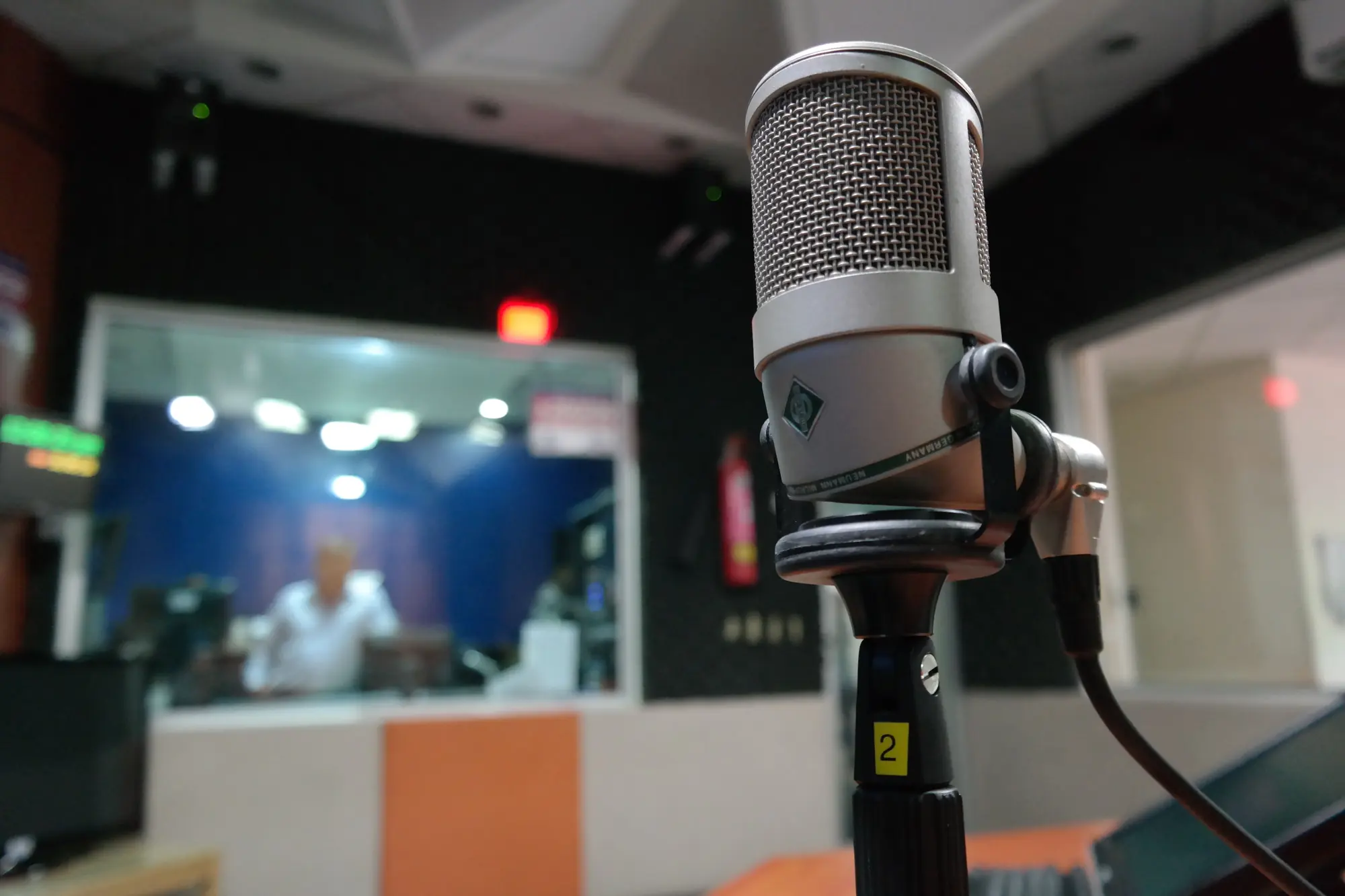
- Professional studio recording, Recording in broadcast-quality studio environments (UK and international studios) with professional microphones, acoustic treatment, and experienced Arabic recording engineers. We provide remote direction via ISDN, Source-Connect, or video call so you can guide the session in real time.
- Audio post-production, Noise removal, level normalisation, compression, EQ, and final mastering to broadcast standards (48kHz/24-bit WAV, MP3, or your required format). For video narration, we synchronise Arabic audio to your video timeline, adjusting pacing to match scene changes and visual cues.
- Quality review, A native Arabic linguist reviews the final recording for pronunciation accuracy, natural delivery, and script adherence before delivery. Retakes are included for any sections that do not meet quality standards.
Typical turnaround: 3-5 working days for a 5-minute corporate video narration, including translation, recording, and post-production. Rush service available for urgent deadlines. See our dubbing services for lip-synced video work.